
Power track, power strip and power rail are terms that can sound surprisingly similar when you are searching for ways to add more electrical outlets to a home or workspace. However, they do not always describe the same type of product.
The biggest distinction is between a portable power strip and a modular Power Track system. A power strip typically extends several socket outlets from an existing wall socket using a cable, while a Power Track creates a dedicated rail where compatible adaptors can be positioned along the track. “Power rail” is less consistent because some manufacturers and retailers use the term interchangeably with Power Track. Understanding these differences can help you choose a solution that suits your space rather than relying on terminology alone.
A power strip is usually a portable extension device connected to an existing socket, while a Power Track is a modular electrical rail that accepts movable compatible adaptors. “Power rail” is commonly used by some suppliers as another name for a Power Track-style system. The right option depends on whether you need temporary extra sockets or a more integrated and flexible power solution.
A Power Track is a modular electrical system designed to provide power along a track rather than from only one fixed outlet position. Compatible adaptors can be installed and repositioned along suitable sections of the track, giving users greater flexibility when appliances, chargers or work equipment move.
Nexen’s Power Track systems in Singapore are designed for residential and commercial interiors and are available in different configurations, lengths and installation styles. Nexen currently offers both surface-mounted and recessed systems as well as compatible power and charging adaptors.
A power strip, by comparison, normally consists of several portable socket outlets attached to a cable and plug. It obtains electricity from an existing wall outlet rather than becoming a permanent part of the electrical layout.
A power strip is useful when several devices need to share one existing wall socket. Common examples include computer equipment, chargers, lamps and other relatively portable devices around desks or entertainment areas.
Its principal advantage is convenience. A user can normally move or replace the strip without altering the property’s electrical installation.
However, a power strip does not create additional electrical capacity simply because it provides more sockets. Users still need to consider the connected load and the suitability of the electrical products being used. Singapore’s Consumer Product Safety Office advises consumers that overloading wall socket outlets can create a fire hazard and recommends installing additional outlets where necessary rather than relying on overloaded connections.
This is one reason the number of visible sockets should never be treated as the only consideration when planning power access.
A Power Track provides a more integrated approach to distributing socket positions across a defined area.
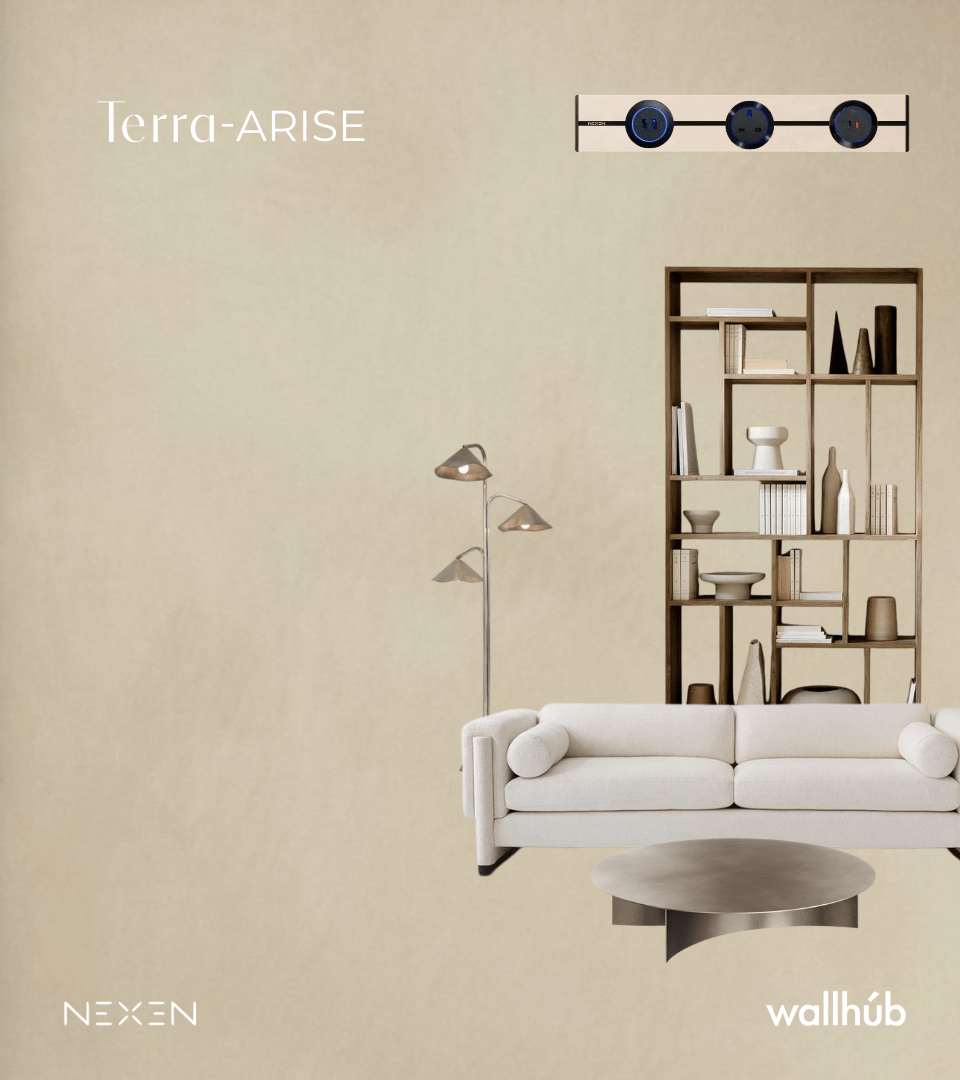
Instead of placing several fixed wall outlets side by side or allowing extension cables to run across a work surface, a track can provide multiple positions where compatible adaptors may be placed. With Nexen systems, adaptors can be repositioned along the Power eBar according to changing requirements.
This makes Power Tracks particularly relevant to spaces where electrical needs may change. A kitchen may use different appliances at different times, while a home office may need to accommodate monitors, chargers and computers as the desk arrangement evolves.
Power Tracks can also be considered during renovation so their positioning works together with cabinetry, furniture and the overall interior.
The term power rail is not used consistently across every manufacturer, which is why users searching online may encounter different descriptions.
In the modular socket market, some suppliers use “power rail” to describe essentially the same category of product that others call a Power Track. For example, Line8 and associated product listings describe their modular electrical tracks as both Power Tracks and power rails, with sockets that can be added or repositioned along the rail. Other Singapore suppliers similarly use terms such as track socket, modular power rail and Power Track for comparable concepts.
For consumers, the product specifications matter more than the label. Instead of assuming that every “power rail” has the same design or capabilities, check its electrical rating, compatible adaptors, safety certification, mounting method and intended use.
The main practical difference is that a power strip is generally an extension of an existing socket, while a Power Track is intended to create flexible socket positions along an installed rail.
A power strip may be sufficient when you simply need a few additional sockets temporarily. It can be useful beside a desk or in another location where portability matters more than integration.
A Power Track becomes more relevant when flexibility is part of the room design itself. Instead of deciding permanently where every individual socket should sit, users can position compatible adaptors along the track as requirements change.
This can be especially valuable in kitchens, workspaces and built-in furniture where appliances and devices may not always remain in exactly the same position.
Cable management is one area where the difference becomes particularly visible.
A portable power strip requires a cable between the existing wall socket and the strip. Depending on its placement, this can add cables around floors, furniture or work surfaces.
A Power Track can be positioned closer to the area where electricity is required, allowing compatible adaptors to be distributed along the track. Surface-mounted configurations can become an intentional part of the interior, while recessed Power Tracks can be integrated more closely into suitable cabinetry or furniture.
If the visual integration of the track is important, our comparison of surface vs recessed Power Tracks should be used as the supporting guide once that article is published, while the main Power Track page remains the primary product destination.
The right choice depends on how permanent the requirement is and how frequently the layout changes.
A power strip may be sufficient for a temporary desk arrangement where only a small number of devices need power. For a planned workstation, meeting space or built-in desk, a Power Track may provide a cleaner and more adaptable long-term approach.
Kitchens present an especially strong use case because appliances such as kettles, coffee machines, blenders and other countertop devices may be moved according to how the work surface is being used. Our dedicated Power Track for kitchen guide explores this application in greater detail.
The decision should still account for the electrical requirements of the connected appliances rather than simply increasing the number of available adaptor positions.
Start by determining whether your requirement is temporary or part of the property’s longer-term electrical layout. If you only need several portable outlets in one location, a suitable power strip may solve the problem without requiring installation.
If you are renovating, redesigning a room or regularly changing where power is required, a modular Power Track may offer more flexibility.
Electrical ratings, product compatibility and safety should also be considered. Singapore’s Consumer Product Safety Office recommends checking for the SAFETY Mark on applicable Controlled Goods, including relevant plugs and socket-outlet products.
Where electrical installation, modification or rewiring is required, the Energy Market Authority states that electrical work at consumer premises should be carried out by Licensed Electrical Workers.
Power strips and Power Tracks solve different problems, so the better option depends on what you are trying to achieve.
A power strip provides convenient portable socket expansion from an existing outlet. A Power Track provides a more integrated way of creating flexible adaptor positions along an installed rail. Meanwhile, the term power rail often refers to the same general modular-track category, although individual products can differ considerably.
At Nexen, we recommend planning power access around how the room will actually be used rather than simply adding the largest possible number of sockets. Track location, length, adaptor requirements, interior layout and future flexibility should all be considered together.
If you are planning a renovation or upgrading the power access in an existing space, our team can help assess the available Nexen Power Track configurations and recommend an option suited to your home, office or commercial interior.

The terms are often used interchangeably by manufacturers and retailers selling modular track-based socket systems. However, product designs and specifications vary, so consumers should compare the actual electrical rating, compatible adaptors, installation method and certification.
No. An extension cord or power strip normally connects to an existing wall socket through a cable. A Power Track is an installed modular rail designed to accept compatible adaptors at different positions along the track.
It can reduce the need for portable power strips in suitable locations, but the two products serve different purposes. Whether a Power Track is appropriate depends on the electrical requirements, layout and intended installation of the space.
Power Tracks can be useful during renovations because their location and configuration can be planned together with cabinetry, furniture and electrical requirements. Surface-mounted systems may also be suitable for existing interiors depending on site conditions.
Click on the link to find out more about our services and products. Chat with our sales representatives today!
WhatsApp Us
Home
About Nexen
Our Products
Luxe Collection
Power E-Bar Collection
Kinetic Switch